


You walk into the room and say good morning, but her eyes don't light up the way they used to. She doesn't say your name because right now, you could be anyone. If moments like this have become your daily reality, your parent may have reached end-stage dementia, and this guide will walk you through what to expect and how to find the support your family needs.
Key Takeaways
- End-stage dementia is the final phase when patients need round-the-clock assistance and can no longer communicate meaningfully or recognize family members
- The most common end-stage dementia signs include severe memory loss, inability to walk independently, difficulty swallowing, complete incontinence, and frequent infections
- Several factors cause dementia to progress faster, including age, overall health, serious infections, and nutritional challenges
- The final stage typically lasts one to three years, though some patients may remain longer depending on overall health and quality of care
- Professional personal care assistance helps families manage daily needs while preserving dignity for both patient and caregiver
Recognizing the Signs of End-Stage Dementia
Families often struggle to know exactly when their parent has entered the final stage. The transition happens gradually. Still, certain end stage dementia signs clearly indicate the disease has advanced significantly. Read more about hospice services at LifeChoice.
Memory, Communication, and Physical Changes
By this point, your mother may look at her husband of fifty years and see a stranger. She doesn't know where she is. She can't process what's happening around her. The ability to form any new memories has disappeared, and even childhood memories have faded.
Speech often reduces to a few repeated words or sounds, and some patients become completely nonverbal. Your dad might still respond to the warmth in your voice or the gentle pressure of your hand, but meaningful conversations are no longer possible.
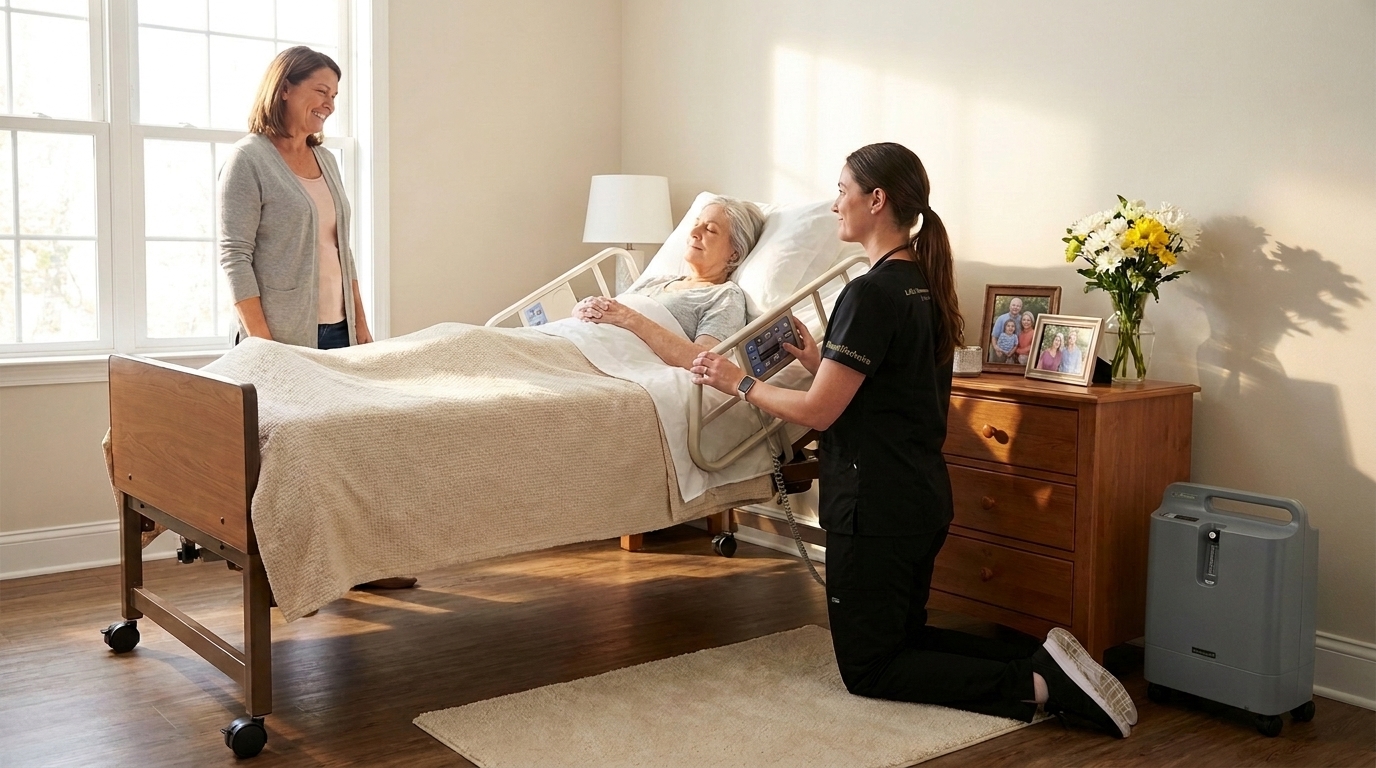
Walking becomes impossible for most patients in this stage. They may need to stay in bed or use a wheelchair with full support. Hospital beds and wheelchairs can help keep them safe and comfortable.
Swallowing Difficulties and Their Consequences
This change represents one of the most significant end-stage dementia symptoms families face. The muscles that control swallowing weaken, creating serious risks. Food or liquid can enter the lungs instead of the stomach, leading to aspiration pneumonia. Many families must make difficult decisions about feeding tubes during this time.
Incontinence and Infection Risks
Complete loss of bladder and bowel control is expected at this stage. This means round-the-clock help becomes necessary. Keeping skin clean and dry becomes essential for preventing painful bedsores and infections.
The immune system weakens considerably during end-stage dementia. Urinary tract infections, pneumonia, and skin infections occur more often and prove harder to treat. For many patients, an infection ultimately becomes the direct cause of death.
What Causes Dementia to Progress?

Families often ask why the disease keeps getting worse, especially when they're doing everything right. The truth is that dementia never stops progressing. Abnormal protein deposits, damaged blood vessels, and other neurological changes continue destroying brain cells. No current treatment can halt this process.
Age and existing health conditions play significant roles. Someone diagnosed at 85 with heart disease and diabetes will likely progress faster than someone diagnosed at 70 with no other health problems. Each serious infection or hospital stay can accelerate cognitive decline.
How Long Does End-Stage Dementia Last?
This question comes up in nearly every family conversation about late-stage dementia. How long does end-stage dementia last? The final stage typically lasts one to three years, though this varies based on overall health and care quality.
Rather than focusing on how much time remains, many families find more peace in focusing on quality of life and comfort for each day.
Small Ways to Provide Comfort

Even when your mom can no longer speak or recognize you, connection is still possible. Hold her hand, stroke her hair, or give gentle massages because physical contact remains meaningful even when words fail. Play music from her younger years since many patients respond to familiar songs when they respond to nothing else. Sit quietly beside her and read aloud from a favorite book because your voice itself is soothing, even if she can't follow the words. Keep the room calm, well-lit during day, and dark at night while reducing loud noises and sudden movements that might cause distress. These small acts matter more than you might realize.
How Personal Care Assistance Helps Families
Managing daily personal needs like bathing, toileting, and grooming presents enormous challenges when someone has end-stage dementia. These tasks require patience, specialized skills, and physical strength.
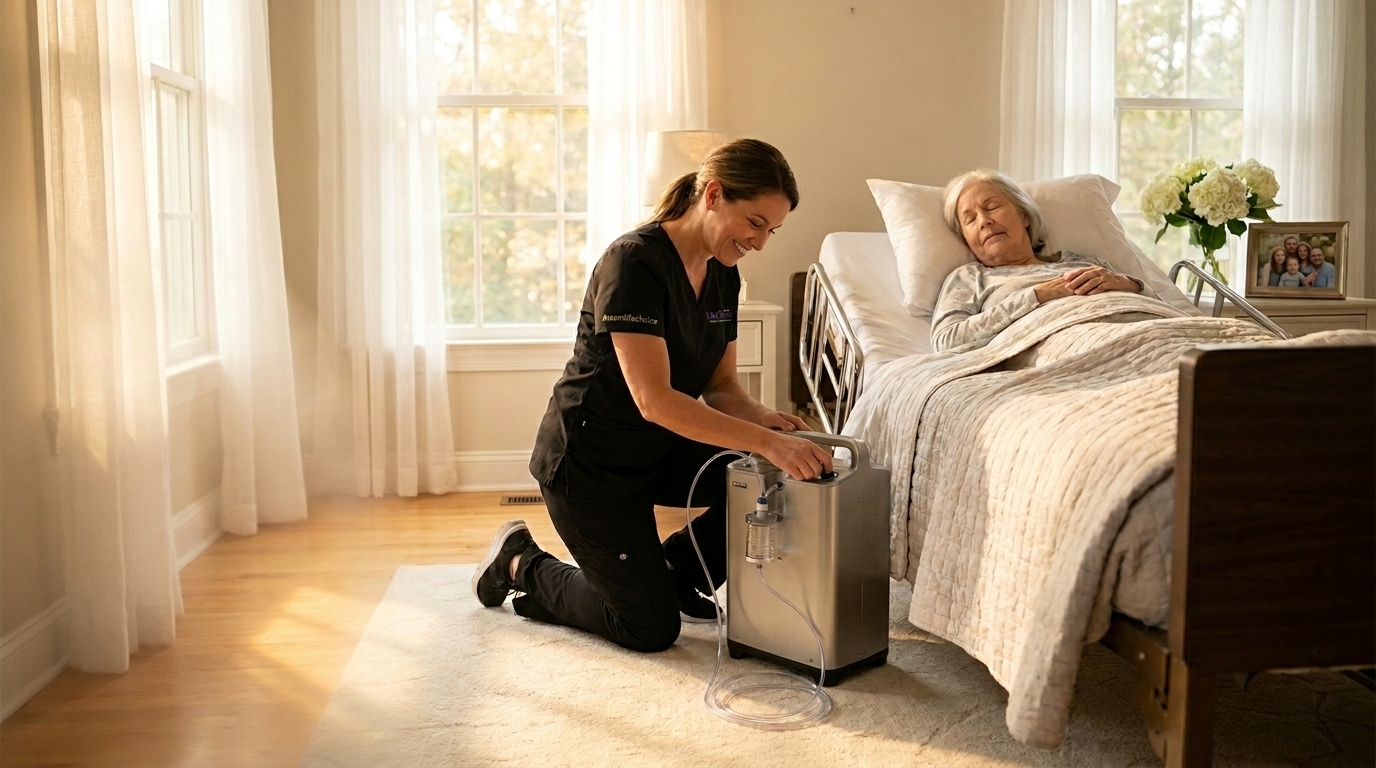
Professional personal care assistants receive training to handle these needs with dignity and gentleness. At LifeChoice Hospice & Palliative Care, personal care assistants provide support in several ways.
- Bathing, showering, and bed baths for those who cannot be moved safely
- Toileting assistance and incontinence care
- Oral hygiene, including brushing, flossing, and denture care
- Grooming like hair brushing, shaving, and skin care
- Safe repositioning to prevent bedsores
Having this support means you can step back from being a full-time nurse. You can sit with your mom, hold her hand, and simply be her daughter again.
When Hospice Care Makes Sense
Hospice care serves people with terminal illnesses who doctors expect to live six months or less. End-stage dementia often qualifies, and hospice provides support that makes an enormous difference for the whole family.
LifeChoice Hospice was founded in 2012 by registered nurse Alex Roshko after experiencing gaps in his own grandfather's end-of-life care. His team brings care that's personal, patient, and deeply human to families throughout North Chicago and the northwest suburbs, including Cook, Lake, McHenry, and DuPage counties.
The interdisciplinary team includes nurses, social workers, chaplains, home health aides, and counselors. They manage physical symptoms while providing emotional support, spiritual care, and guidance. They also offer grief support for up to 13 months after a loved one passes.
With a 98% family satisfaction rate and a 4.9-star rating, LifeChoice has earned the trust of thousands of Illinois families. They hold ACHC accreditation and Medicare certification, with a quality score of 80 out of 100, well above the national average of 67.
You Don't Have to Face This Alone
If your parent is showing end stage dementia symptoms and you're feeling overwhelmed, support is available. LifeChoice Hospice & Palliative Care helps families through this time with expert guidance, compassionate care, and practical assistance. Their team answers calls 24 hours a day, 7 days a week.
Ready to learn more? Contact LifeChoice about personal care assistance to see how trained caregivers can support your parent with dignity and ease the burden on your family. You can also call 847-777-8888 or email info@mylifechoice.org.
You've been carrying so much. Let someone help you carry it.
FAQ
If you are facing this now, our guide to recognizing when it may be time for hospice is a gentle place to start.