


Watching someone you love struggle to breathe is one of the hardest things a caregiver faces. And when that breathing turns deep, loud, and relentlessly paced, it's easy to feel like something has gone terribly wrong. What you're likely seeing is Kussmaul breathing, also called Kussmaul respirations, a pattern the body produces when blood acid levels climb dangerously high, most often from advanced kidney failure, diabetic ketoacidosis, or sepsis. Knowing what drives this pattern, what it signals, and how it reads differently from Cheyne-Stokes breathing gives families more than alarm.
Key Takeaways
- Kussmaul respirations are deep, rapid, and consistently rhythmic, driven by the lungs' automatic response to dangerously acidic blood
- Advanced kidney failure, diabetic ketoacidosis (DKA), and sepsis account for most cases at end of life
- The Kussmaul breathing pattern stays sustained and regular; Cheyne-Stokes breathing cycles through shallow breaths, deepening breaths, then full silence. The two patterns carry different causes and different meanings
- This breathing doesn't indicate pain. It's a physiological process the body runs automatically
- Elevating the head of the bed 30 to 45 degrees, keeping the room cool and quiet, and avoiding forced fluids all reduce physical strain
- LifeChoice hospice teams stay available 24 hours a day, 7 days a week, for clinical guidance and family support
What Is Kussmaul Breathing?
In the 1800s, German physician Dr. Adolph Kussmaul documented a breathing pattern in patients with diabetic coma that didn't match anything else he'd seen, deep, forceful, relentlessly paced. It carried his name, and today Kussmaul breathing remains one of the most clinically recognizable signs of severe metabolic crisis. Read more about hospice services at LifeChoice.
At its core, Kussmaul respirations represent the lungs stepping in as an emergency acid-management system. Normally, blood pH stays between 7.35 and 7.45. When acid accumulates faster than the kidneys can filter it out, the brain signals the respiratory system to expel carbon dioxide faster. CO2 is itself a natural acid, and exhaling more of it pulls the blood's pH back toward safe levels. Each breath draws air deep into the lungs, the chest and abdomen both visibly expand, and the pace runs well above the normal resting rate of 12 to 20 breaths per minute. Unlike patterns that wax and wane, Kussmaul respirations hold steady. No clustering, no long pauses. Just a sustained rhythm the body maintains until it can't.
Families often notice the sound before anything else. Not a rattle, not a wheeze. Just a deep, effortful breath audible from across the room. The person breathing this way doesn't necessarily look panicked. The brain drives this response automatically, without the person's awareness.
What Causes Kussmaul Respirations?
Every case of Kussmaul breathing traces back to metabolic acidosis, a state where blood turns too acidic for the body's chemistry to function. The lungs can compensate by exhaling CO2, but they can't fix the underlying problem. That falls to the kidneys, which at end of life often can't do their job anymore.
A handful of conditions account for most cases.
What Kussmaul Breathing Means at End of Life

As a serious illness advances, the body's self-regulating systems fail one by one. The kidneys slow their filtration. The liver loses its processing capacity. The equilibrium that normally keeps blood chemistry stable unravels, gradually at first, then faster.
Kussmaul breathing surfaces from that unraveling. Acid accumulates in the blood. The brain detects it and signals the lungs to compensate. The body doesn't know the kidneys aren't coming back online. It just keeps running the emergency protocol it was built to run.
For patients with advanced kidney disease, this breathing often appears in the final days. For those with uncontrolled DKA or late-stage sepsis, it can arrive more quickly. Timing varies significantly from person to person, and the hospice nurse on your team will have the clearest read on where things stand.
The most common question at this stage is a hard one. Does my loved one feel like they're suffocating? Not from the breathing itself. The body produces Kussmaul respirations the same way it produces a fever, automatically, without the person's input. Any discomfort comes from the underlying illness. The hospice team monitors for distress signals like facial tension, restlessness, and moaning, and adjusts comfort medications if those appear.
Cheyne-Stokes vs. Kussmaul Breathing and Why They Are Not the Same
Families and even some general medical staff occasionally confuse these two breathing patterns, probably because both appear in serious illness and both look alarming to bystanders. But Cheyne-Stokes vs. Kussmaul breathing isn't a matter of degree. They come from entirely different mechanisms and tell you different things about what's happening in the body.
Kussmaul breathing solves a chemical problem. The blood is acidic; the lungs compensate. The signal stays constant, so the breathing stays constant.
Cheyne-Stokes breathing reflects a neurological problem. Inconsistent blood flow to the brain creates inconsistent breathing signals. Breaths deepen, then fade, then stop entirely before restarting. Those silences can stretch nearly a minute. For family members watching, they feel longer.
Both patterns can appear in the same patient at different times. Knowing which one you're seeing helps the hospice team give the family a clearer picture.
Treatment for Kussmaul Breathing
In an emergency department, treating Kussmaul respirations means treating the cause. Insulin for DKA, dialysis or fluids for kidney failure, antibiotics for sepsis. When the underlying condition responds, the breathing normalizes. At end of life, when the illness has moved past reversal, the goal stops being correction and starts being comfort.
No medication stops Kussmaul respirations directly. What the hospice team manages are the signs of distress layered on top of the breathing. Low-dose opioids reduce the sensation of breathlessness without unnecessary sedation. Anxiolytics can ease restlessness. The hospice nurse watches for concrete signs like a furrowed brow, clenched jaw, or repetitive movement, and responds to those rather than the breathing rate itself.
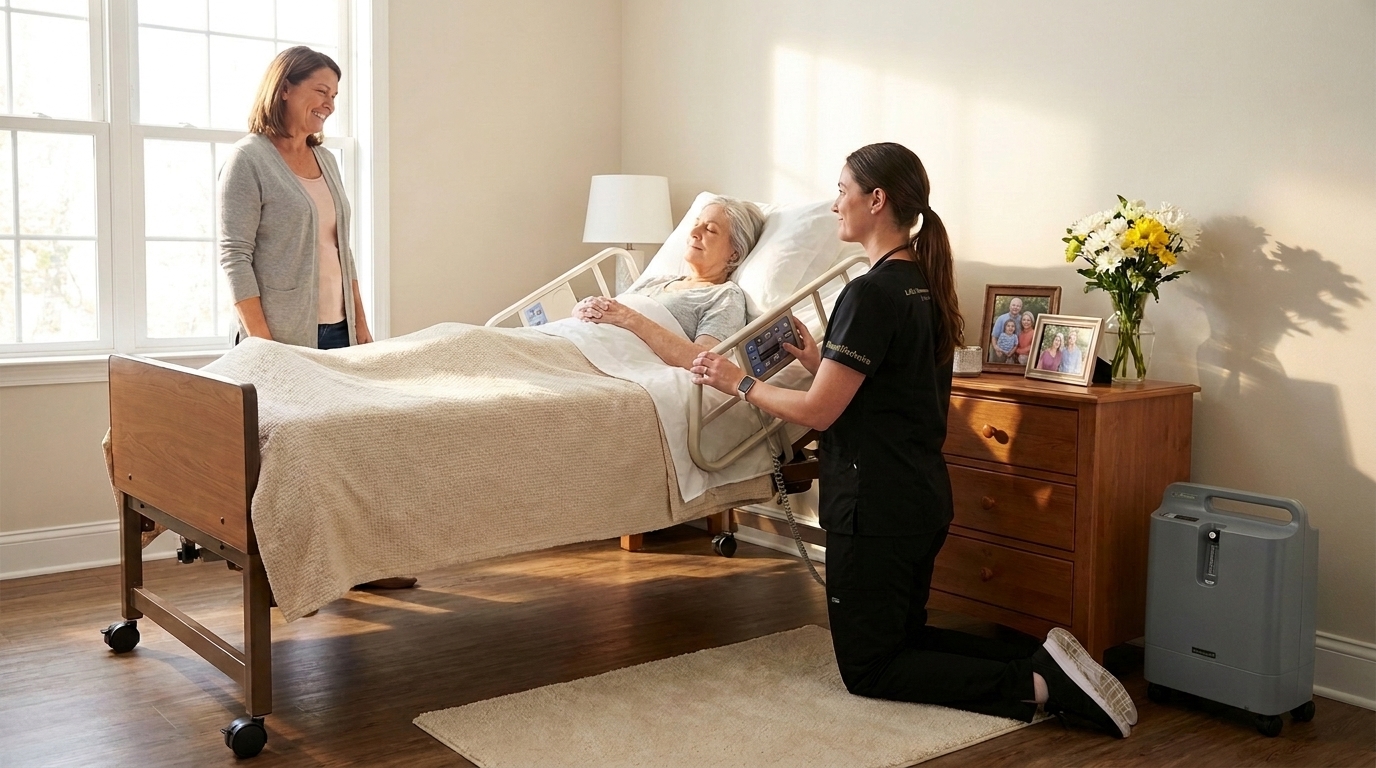
On the equipment side, elevating the head of the bed to 30 or 45 degrees takes real mechanical pressure off the respiratory muscles. Hospice medical equipment, including an adjustable hospital bed, bedside fans, and humidifiers, gets delivered and set up by the hospice team, so families don't have to source it themselves.
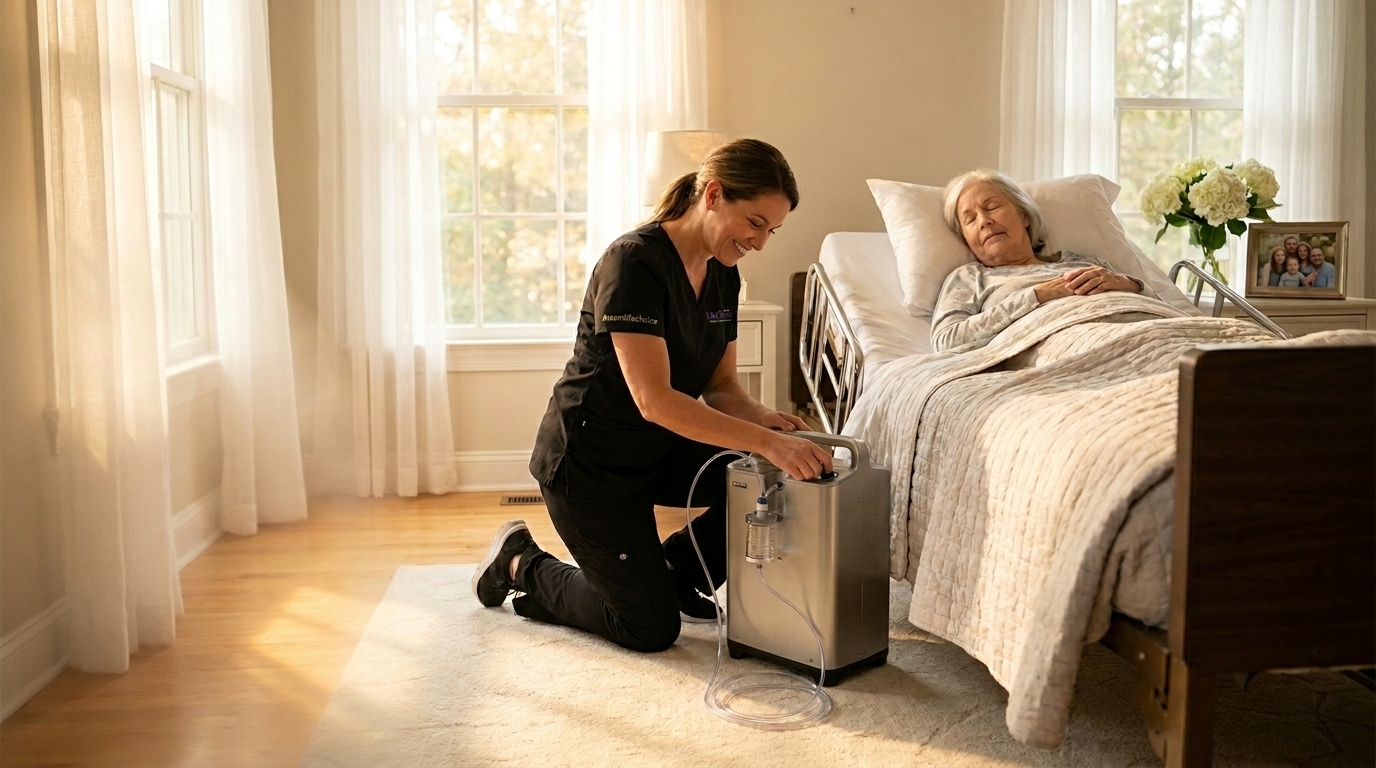
Supplemental oxygen rarely helps here. Kussmaul breathing stems from metabolic imbalance, not low oxygen levels. Adding oxygen doesn't address the acid problem and can occasionally reduce respiratory drive in ways that cause discomfort. The hospice team makes that call based on the individual patient.
How Caregivers Can Help Someone With Kussmaul Breathing
The physical environment matters more than most caregivers expect. A small fan blowing gently toward the face (not cold air, just moving air) reduces the sensation of breathlessness even when oxygen saturation looks fine. Bright overhead lights, strong smells, and background noise from a television all add sensory load the body doesn't need right now. Dimming the room, cracking a window, keeping foot traffic low. Together, these create a space that asks less of a body already working hard.
Positioning needs checking regularly. Gravity pulls people flat over hours, and lying flat increases the work the respiratory muscles have to do. A personal care assistant or hospice aide can reposition safely throughout the day, so don't try managing this alone as your loved one becomes less able to shift their own weight.
Resist the instinct to offer water or food. The body has naturally reduced its need for both, and pressing fluids adds to the metabolic load. A damp swab on the lips handles dryness without the burden.
Talk. Even without a response, hearing persists long after other senses have faded. Your voice, specifically yours, registers as something familiar and safe. Read aloud. Play music at low volume. Say what needs to be said.
Watch yourself, too. Caregiver exhaustion builds quietly. Sleep when someone else can sit with your loved one. Call the hospice social worker if you need to talk through what you're carrying. Call your hospice nurse any time breathing shifts or looks more distressed. That's exactly the call they're there for.
Hospice Support for Breathing Changes at the End of Life

Most families encounter Kussmaul respirations, Cheyne-Stokes breathing, or the death rattle for the first time at a bedside, with no preparation. The gap between what's happening in the body and what families have any context for generates real, unnecessary suffering, and it falls entirely on the people watching, not the person in the bed.
When breathing changes appear, the LifeChoice nurse comes to assess. The nurse explains what the family is seeing in plain language, adjusts the care plan, and stays long enough to answer questions. That's different from a phone consultation or a pamphlet. It's a trained clinician reading the same room you're in.
Founded by registered nurse Alex Roshko, who started LifeChoice after watching his own grandfather receive impersonal end-of-life care in 2011, the organization has spent over 15 years serving families across Cook, Lake, Kane, McHenry, and DuPage counties. Nurses, aides, social workers, and chaplains stay available around the clock. A 98% family satisfaction rate and a 4.9-star rating reflect what that looks like for real families going through this.
Call 847-777-8888 or visit mylifechoice.org to request a free consultation.
FAQ
If you are facing this now, take a look at our free hospice assessment guide.